

The Highlight Reel: Setting up celebrity brands for success
Automated webinar transcript
Setting up celebrity CPG brands for success
In this episode of the Highlight Reel, we talk about the latest goldrush in CPG: celebrities founding their own brands. Join Barrel CEO Lucas Ballasy, Highlight CEO Dana Kim, and Jackie Widmann, SVP Marketing & Commercial at BERO as they discuss what it takes to attract shoppers to trial, build affinity, and drive the kind of long-term loyalty it takes to win in this competitive industry.
Hello and welcome to the highlight reel, an interview series featuring CPG industry leaders and trailblazers who are building products that people love. I'm Dana Kim, founder and CEO of highlight, and today I'm joined by two special guests to talk about the latest gold rush in CPG celebrity backed brands.
Please welcome Lucas Ballasy, CEO of Barrell, and Jackie Widmann, SVP of marketing and commercial at BERO. Uh, let's start off with some intros. Jackie, let's start with you. I'm Jackie Widmann. I am the SVP of Marketing and Commercial at BERO. We are a premium non-alcoholic beer, um, founded and created by Tom Holland, who some of you may know from his, um, you know, series in Spider-Man and many, many other critically acclaimed films.
Mm-hmm. And great shows. Um, you know, this product is really something that all of us on the team are super, super passionate about. We created. A non-alcoholic beer that is crafted with really premium ingredients. We want this product to be something that people reach for when they are craving social connection and they want to be a part of the moment and celebrate all that life has to offer, but really, you know, allow ourselves to enjoy the moment without any of the negative effects that come with drinking alcohol.
It's not about sobriety. It's really more of a lifestyle. Awesome Lucas. Sure. Um, so Lucas, I'm the CEO at Barrell. Um, been with the company for the last 12 years, um, background in design and branding. So actually started there 12 years ago as a, as a designer. Um, and have since really grown the agency to where we are today.
Um, and what we do is we work closely with CPG brands, really helping them build out their digital experience across channels. So, uh, relevant for today's discussion, one of our recent clients was Stiller Soda, um, which we've had a lot of fun working on, but we've also, you know, worked with brands like McCormick once upon a farm, uh, Khloe Kardashians Cloud.
Um, really helping figure out how to tell their story online, which we think is incredibly important in, in 2025, no matter where you're selling. Um, just having that story told online. Very cool. Well, we have BERO and Stillers on display here, but both of you have so much experience and a wealth of knowledge beyond those brands, so.
Very excited to dig in. Lucas, I'd love to start with you in terms of digging into, you talked a little bit about digital storytelling. Mm-hmm. And ensuring that brands are able to tell their stories online. Of course, we were in a heyday of D two CA couple years ago. Now many CPG brands are really doubling down on retail as the most scalable, effective channel to reach customers. Um, so in a world where most consumer brands are retail first, how do brands successfully tell their stories online? And what role does website play? Yeah, I mean, there's a few different terms I like to use. One is brand flagship. The other these days it feels very relevant is the brain of the brand.
Mm-hmm. Um, because just kind of at its core. The website is powering so many other channels now. And so if we think about AI search as a big one that everyone's talking about, that content needs to come from somewhere. And so it's really a decision for the brand to say, do we wanna own our narrative online, or we do, do we want someone else to own it?
Yeah. Um, and so if you are in a space that has a lot of customers creating recipes or doing product reviews as an example. Uh, we actually had a client who doing some AI search optimization. We found this, they had a, uh, a woman who was creating a, a blog around their product, and that was the leading source for all of AI search because she's written the most content and this brand had no idea that this existed.
Mm-hmm. So for them, it's like, okay, how do we kind of take control of who we are online? So I think from like a data driven perspective, there's that, that's literally happening and it's really important. Mm-hmm. Um, but I think we, we, what we're excited about is we're seeing clients coming to us more and more for what I'm about to say, uh, which has, hasn't always been true, but it's this idea that, you know, we acknowledge that one, the customer journey is no longer linear.
Um, and two, that we live in a very connected world. So. Uh, you know, I don't know anybody's gone to a coffee shop in New York. Kidding? Obviously you have, but like, you know, your credit card, uh, loyalty points pop up on the thing and you know, you do all this digital, then you get a text when you get your receipt.
Like mm-hmm. We're always on our phones, even in these real life experiences. Mm-hmm. And so we see it as no different as a brand. If I am, you know, looking, if I'm at the beer store. Um, and I am looking for a non-alcoholic option. Mm-hmm. I'm most likely just Googling each brand. Mm-hmm. I'm looking at the packaging, but then I'm like on their site.
Mm-hmm. And if the site can't answer the questions on my mind about sourcing or who's behind this or why I should care Totally. I'm not gonna pick it up off the shelf. And so I think what we're excited about and what we're trying to help our clients always think about is like, where are the moments that people are looking at your site?
And I think the brands who aren't. Doing well or saying we're in retail, like we just have some products on the site, and then I meet the founder, for instance. We have this amazing conversations that go on the site and I'm like, nothing about any of this is here. Mm-hmm. So why would somebody mm-hmm. Like you, you're, you're putting so much in the packaging and just hoping that they get something out of it.
Mm-hmm. Um, so that's really what we're thinking about. And even if you're, you are selling online, um, for, I would say like 95% of our clients, it's not the main channel or. They plan for it not to be the main channel. Yeah. But it's just as important to really be that space. Um, and if you think about it, it's really the only channel that you can fully control.
Mm-hmm. Um, because in social, in retail, there's so many other factors that can change how someone sees you. And so we're like, why not fully own it? And I think. You know, beer is a great example of a brand. Like when Jackie and I met and you know, I had already heard Tom's story on a podcast. Mm-hmm. Uh, I was so impressed by a brand who's selling a beverage.
Mm-hmm. Investing so much and creating an amazing online experience that you can engage with and learn from, uh, versus just being like, cool, we're going in retail. Like that's not what. We don't need to worry about that. Mm-hmm. Um, because yeah, you do. Yeah. You do have to, you do have to worry about it. So, yeah.
Totally. Yeah. I, um, I definitely remember when Jackie told me she was moving to BERO and I looked it up. I was like, wow. Uh, like so much interesting content on here that I wouldn't expect for a brand that is primarily, um, selling or going to primarily sell in retail. Um, and over time, I've found like. I, I, I feel like I'm surprised and delighted every time I go to the BERO website, I'm like, oh, they have cool merch.
I want this tote. It's sold out. Like, there's like this really, um, interesting journey that I'm on where I, I don't necessarily think of BERO as just a beverage brand, actually. It's more of like a lifestyle. Um, uh, that goes to my next question for you, Jackie, which is, um, there is so much messaging around Tom and his story, um, as it relates to building the BERO brand and positioning.
Um, but there's also. Um, real pride in the liquid and what's inside the can. So how do you balance, um, the, the story of BERO while also proving it's, it's delicious. It stands up, it holds up to other products in the category? Yeah. It's honestly a challenge that we are thinking through every day because.
Ultimately, the way that people discover the brand may vary depending on what platform they come across us. Whether it's Google search or some AI result is spitting us out as the top hit for something that they should check out. Or maybe it's one of our paid ads on social, which vary in topic from street interviews to quality of the liquid and our brewing process with our amazing Brew Master Grant Wood, who comes from 40 years of experience in the industry.
Such an acclaimed background. Um, we wanna tell his story. Mm-hmm. And the story of the liquid. Mm-hmm. Just as much as we want to tell Tom's story. Totally. Hopefully our core customers can understand that there's really like a full 360 approach that goes into that. Mm-hmm. And they start to then be able to share via word of mouth.
Not only is this a great non-alcoholic beer that was started by Tom, who I love from, you know, Spider-Man, but this is also a product that has real, you know, grit to it. We have. Years of industry experience. The product tastes great. We're sourcing really special ingredients from around the world, um, to ensure that the product is what people expect from a flavor profile perspective.
So I think, you know, the long answer to that is there's not one way that people are discovering us the most necessarily. We're hopefully getting spotted in retail. We're hopefully starting to show up in more restaurants and bars, you know, around the US and the uk. But. I think ultimately the online presence for the brand has been critical because I think if it's not the website, it's our Instagram or our TikTok and all three of those digital platforms have been crucial to telling the story.
And the website has been one that we wanna keep evolving and be able to show even more elements of, you know, how our brewing process works, what it looks like, interviews, and mm-hmm. You know, more engagement for the consumers so they really feel and live the brand. Yeah. Not just buy it, you need a beer or a tap room.
Yeah. One day I'll be there. I would love it. Amazing. Um, Lucas, you um, mentioned the importance of the website, um, the heart of the brand, um, really showing up in digital experiences. Um, how do you think about across your portfolio brands or maybe using Stillers as an example, when you have specifically a celebrity owned brand?
Um, there is sometimes skepticism around, is the product actually good? Um, but there's also obviously a lot of attractiveness and attention that comes from a celebrity backing the brand. So how do you sort of balance that in creating a website or creating an online experience, um, to, to most hook consumers?
Yeah. I think, um, part of it is up to us and part of it is up to, you know, how that brand is thinking about it. And we may or may not agree. Um, I think what I love about, uh, distillers or BERO as an example is. At the end of the day, like all of these celebrities, creators, whatever, they're all just people like us.
Mm-hmm. And they have things that they don't see in the market, but ultimately they have the resources to act on it a little differently than maybe me or you would. Mm-hmm. Mm-hmm. And I think those are the brands that are most poised to be successful if they know that this is an opportunity. So for Stillers, it's like.
There's so many functional beverages out there trying to do so much. Let's just create like a better soda that is lower calorie, lower sugar that you can feel okay drinking and still have that kind of experience of, you know, going to get tacos and having a root beer or whatever it might be. Mm-hmm. Um, BERO I loved hearing, uh, on the Rich Roll podcast is what I was referencing, Tom, for anyone, definitely check it out.
Um, kind of talks about. Wow. And Jackie, please correct me, I'll do my best. But you know, doing dry January. Mm-hmm. And then realizing it was way harder than he thought. Mm-hmm. And he, it, instead of giving up, he was like, I think I need to like do something here. Mm-hmm. 'cause this is way harder than I thought.
Yep. Um, and through that experience, you know, was at bars and realizing like he was always the guy. With the non-alcoholic drink and everybody's kind of like, what's up with you? Yeah. Um, and so this need to create a great non-alcoholic drink that could fit into that, that vibe. Um, and so I think through those experiences, they're trying to create something that is a great product, serving a need for a person like them.
Mm-hmm. Um, and so to me, when we think about, you know, long-winded way of saying when we think about the website mm-hmm. It's really making sure that that comes through. Mm-hmm. And not necessarily like, you know. If that social, presence is there or aura around the celebrity is there, that may be what gets them, you know, someone into, if we think of it as a party or something, like it gets 'em in the door.
So if they land on the website or they get into the experience, they don't necessarily need to see that person again Right. In the front. So if you go to the Stiller's website, Ben Stiller is not the top of the page. because then it's like, okay, well what is the, Why am I here and why will I stay?
Why will I engage? and so for us, that's kind of like. Pulling that out, really understanding, is that what the product is about? Is the product a good product? Is it serving a need? And that comes through. And then as that kind of takes off, you know, the hope, I think for many of these brands is that Tom Holland, Ben Stiller a little hard with the name, but like they become kind of like the punchline.
Later. That like somebody is at a bar. We were just talking about some local bars that serve BERO on tap and they're drinking it and someone's like, you know, that's Tom Holland's Yeah. And they're like, oh, cool. Like this is great. Yeah. It's not like, go try that because Tom Holland started it.
So I think that's like what we're always looking for and we want to be able to tell online as much as possible. Yeah. Yeah. What I would add to that is, and I love how you explained what you heard on Rich Roll's podcast. Yeah. And Tom's story, you said it better than, than I could have. Um, but I think Tom often says with our team that he created this product for his younger self.
And I love that for a variety of reasons. But I think it just really speaks to the intentionality and the authenticity. He wants this to be something that people recognize for just. Being a great beer, it allows you to fit in and feel included in any sort of social environment. Whether you're at a bar, at a restaurant, or at someone's backyard, barbecue, or a basement house, party, whatever it is.
BERO should be that brand. That one is just a great beer. It tastes great. It just happens to not have alcohol in it, but mm-hmm. The process, the way we brew it is a beer. Mm-hmm. The same four ingredients, the same brewing mentality, um, and ultimately the final product. Just doesn't have some of the effects that alcohol might.
But I think, you know, the idea of creating this for your younger self really shows that he wanted this to be something that could leave a legacy, but certainly from a discovery perspective, mm-hmm. People should see this. Love it because it's a great product. And then the association with him is a nice cherry on top where you know he has a great story and the why behind the brand matters.
Love it, love, love that. We, um, we actually ran some original research at Highlight, um, with our community. Uh, we reached over 1200 consumers and we learned some interesting stats that, um, really mirror what you say and echo the importance of having an authentic message and a great product. Um, so 60% of, um, consumers polled said that they are skeptical of celebrity brand, uh, backed products.
Hmm. Um, 29% have purchased a product before because it was backed by a celebrity. Um, but only, um, 12% say they're more likely to trust a new brand if it's backed by a celebrity. Um, and we dig into why and we ask open-ended around why is that the case? It's always because I'm unsure if, if. The celebrity was just paid to market the product.
Mm. I'm unsure of how authentic, um, the product is to the celebrity's, um, actual lived experience. Um, and I think everything that you're both saying around, you know, putting the product first, ensuring that the celebrity is, is genuine in their involvement and, and everything ties and there's an authentic story is critical.
Not only for, um, trial, but also for repurchase on the consumer side. Um, because it can quickly go the other way. It can quickly lead to skepticism. Mm-hmm. Or, you know, this person was just paid off. Um, and I think in both of these scenarios, it's very clear that that's not the case. So, pretty cool. Yeah. I think it's like the, um, when we think about other things, you know, other channels like pr mm-hmm.
Meaning like talk shows, podcasts, all this stuff. Yeah. Um, treating the celebrity as a founder. Is really important. And so like the fact that I keep referencing this podcast, which is, you know, all about kind of personal growth, health and wellness and stuff. To have Tom on there as just a guy talking about a story and then doing this mm-hmm.
Is like incredibly powerful for those who listen to it. Mm-hmm. Which I think is different than like posting on social media and having his face next to this can, and people are just like, what is this like, like another one really? Like why is he doing this? Um, yeah. Yeah. So, yeah, that's super interesting to hear and I think it.
It's like up to the brand to create that narrative because in the absence of it, customers will create it for you and then it's really hard to come out of it. Yeah, totally. Which is to your point, why you need to own your own narrative. Yeah. Hundred percent. With your, with your website, where, which you have full control over.
Um, yeah. The, the exact number is 44% of consumers believe when they see a brand backed by a celebrity that the celebrity was just paid to market the product. Um, so it's a big perception hurdle to cross. Um, I'd love to talk a little bit about product superiority. Um, we talked about the product needing to stand on its own.
I love the idea of Tom or Ben being a punchline or the cherry on top, no pun intended, for a Shirley Temple. Yeah. Um, uh, we, not to brag for you Jackie, but we, we ran some, um, blinded taste testing. Um. Between highlight and BERO to make sure that, um, your team was going in eyes wide open around, um, how does your product perform.
Um, and I, I am, um, excited by the results. I'd love to talk a little bit about what we tested, why we tested it, and um, how the results came out. Um, if that's cool with you. I would love to. Um, so we, um, and maybe I'll, maybe I'll actually pass it to you if you wanna share a bit more about the test and how it came to be.
Yeah, so we, we came to Dana with a specific ask that was a little bit around just, there's a lot of new brands in this space, a lot of legacy brands that have launched 0.0 SKUs. We all love and drink our own product constantly at BERO hq and we believe the brand can be superior. and is, but I think, you know.
We came to Dana with a specific ask around proving that and showing, you know, whether it's investors, whether it's retailers, whether it's eventually some form of customer satisfaction. that our product can stand above some of the competitive set. So specifically we tested our West Coast style IPA, which is certainly what we would say is an internal favorite, as well as a lot of our customers are really, really loving it.
it's got a super strong hop profile. The mouth feel is just what you would expect when you sip on an IPA, specifically a West Coast style. It's delicious. It pairs really nicely with, you know, like that dinner more chicken meat style meal. We, wanted to test that head to head against some of the competitive set, and so we did against one of the major leading competitors in our space.
Specifically their IPA SKU and BERO came out superior in a sample size of about 240, which. Certainly small numbers, but it was a really, really great indication that from an enjoyment and flavor, expectations being met, perspective that customers and consumers that were part of the study were really happy and excited about what we were putting in front of them.
So definitely an amazing step in the right direction for us and sort of proving what we have grown to believe internally. But I think for us. Part of our product development process. We'll be continuing to do more studies like this across our full SKU portfolio. and then also widen the competitive set a little bit so that we can really understand where we have opportunity to make optimizations and where we can go back to Grant our brewmaster and sit and say, you know, this might need a little bit more lemon.
This might need a little bit more hop, this might need a little bit less yeast, or whatever it might be in order for the flavor profile to really be what customers expect when they. Pick up a BERO of a certain sku. Yeah. So it was exciting and you know, I think just the beginning for us in terms of really telling that story.
Yeah. Yeah. It's super cool. The reason I love this story is you've got an amazing brand champion and founder in Tom, Holland an amazing, authentic story. You've got an industry vet leader in John Herman You've got yourself building community and story and marketing. You've got, an amazing brewmaster. And yet you still are holding yourselves accountable to blinded liquid taste testing to make sure that the product you're putting out there is superior in meeting customer expectations.
I can't say enough how much of a green flag that is in terms of like, will your company, your brand, your product portfolio be successful? because we know that trial. can totally be, juiced by celebrity involvement or wonderful marketing, but repeat someone buying that IPA again and again and again, is, is really, contingent on the product being amazing.
and not only are you testing your own product, but holding a high bar, testing against category leaders. very, very exciting stuff. Yeah, we're pumped about it and I think for us, as we continue to evolve what the current portfolio looks like within BERO's offerings, but also what the future looks like.
Mm-hmm. Whether that's new pack configurations, new flavors, limited time offers, special seasonal additions, you know, all of that has to be coming from the consumer. Mm-hmm. Ultimately, we wanna make sure that our customers are happy with what we're putting out there. We want them to feel included in the process and also that.
Everything that they're tasting meets their expectations. Hopefully exceeds it. Yeah. In terms of what else is out there, but also our product just being good enough that it stands on its own. Yeah. It's amazing. Um, the other, um, really fun and creative outcome of this testing was, um, when we were reading through the results, um, you had the idea of.
These are people that you know are loved our product in a blind taste test, can we reach back out to them, let them know we actually just launched in Target, um, and say, thank you so much for your feedback. Go check us out there. Um, and you're constantly thinking through customer journey, how to build community, how to close the loop, how to keep everyone involved, and in a way that I think is.
Is really impressive and, and just thank you. Yeah, that was a fun one. I was like, you're gonna think I'm crazy for this, but can we hit up everyone be a part of the survey it and send them a six pack of BERO? I was like, just to say thank you for giving us some love during this process. It's really helpful as we creatively think about what comes next for the brand.
Um, so that was fun. Totally. So much community building. And actually Lucas and I were talking about how, um, BERO in particular the community that you've built, um, feels very, very thoughtful and um. Yeah, it's very impressive from thank you, from afar. Um, it's just the beginning, hopefully. Yes, definitely.
Um, Lucas, we talked a bit about, um, of course you have a portfolio of brands. You've worked with a ton of different celebrity backed brands. Um, building out their digital experiences and just building out their brands is different from a non celebrity backed mm-hmm. Brand. How do you think about like, um, dos and don'ts in the world of digital storytelling for celebrity backed brands?
Um, what can people learn from. Your, your wide breadth of experience? Yeah. I think, um, the, I guess the most unique parts of it are understanding the, uh, exposure and press that is probably happening around the work that we're doing before it's actually live. Mm-hmm. So there's some very, um. Thoughtful things that we're often bringing when a client reach out and we know that they're, and it's usually like there's a code name for the project.
We're not allowed to know what it is yet. There's like 17 NDAs. Um, but, um, sometimes, you know, we know the product, we don't know who's behind it yet. Mm-hmm. Um, but then we're often like, Hey, you know, what is the, we want to really dig in and this is true for any new launch, but these are just very different.
Sure. Because there's like stages of it becoming. A thing that's available. Mm-hmm. And there's usually like a pr, there's like a, a TV show appearance, or there's like something that's kind of, there's an event mm-hmm. That will happen no matter what. Mm-hmm. Mm-hmm. Um, but then there's also the kind of ramp up.
And so we're often helping, you know, our clients may come for, we need a website, and we're like, let's, let's actually take a step back. What are all the phases before that is available? Mm-hmm. Because there's the chance that it gets leaked. Mm-hmm. Um, there's the chance that the celebrity decides to say something about it when they shouldn't have, um, you know, these things happen.
Yeah. And so we'll do things like putting together a kind of a landing page where it has like, kind of peak imagery, like peaking some of the imagery and then like a signup form so that people can start to sign up to get mm-hmm. You know, notified when it goes live. Mm-hmm. Um, kind of some of these like.
Things to have in place for anything that may go wrong. Um, so that you're not going to, you know, BERO.com before. I don't know if that's the URL, but, uh, BERO.com. BERO brew.com. Okay. There you go. Um, when it's not live and it's just like an empty page mm-hmm. It's like, okay, something's there. Yeah. You know, that you can kind of engage with that.
Looks good. Yeah. Um, so there's that side of it. And then honestly, like, I think the process, we've learned a lot about the process of working with high profile people who. You may or may not have access to, so you're, you're several layers deep. Mm-hmm. Um, and they could come in at the last minute with changes because they weren't able to see it.
Maybe they're shooting a movie or whatever was happening. Mm-hmm. Um, and so just really trying to build process to allow for some of that flexibility and kind of knowing that mm-hmm. Throughout this creative process. Like we just have to trust the team and like, it's no one's fault if something happens.
Mm-hmm. Because, you know, these. These folks, like I always laugh 'cause especially the higher profile that you get, it's like for anybody who's skeptical, it's like they don't have to do this. Mm-hmm. Mm-hmm. Like this is definitely like, this is like a passion project. Mm-hmm. Mm-hmm. They don't have to do this.
Totally. So in that way it's like there's other things going on. Um, and so understanding that as you go through their process as much as they want to be involved, it can be difficult. Mm-hmm. Um, so just knowing like, what do we need to do to kind of. Make sure that we can bend with whatever's happening on the team side.
Yeah. And make sure that like if there's some rocky stuff that pops up, like yeah, we can accommodate and get there for launch. So yeah, I'd say those are some of the things, things that come to mind. Yeah. But then honestly, the best ones are like, just thinking about this is launching any other brand. Yeah.
Like, yeah, we are gonna be in retail. What does that mean? Yeah. You know, is our inventory ready for the demand? Like if we're launching on Amazon, what's the strategy? Like, all of those things become just as important as anybody else. Yeah. Yeah. I love that. Um, one of those critical, um, must have steps in launching a brand and launching a product is identifying your target audience.
Mm. Um, and particularly for these examples, I feel like we've talked a little bit about. Who is the stiller's drinker? Who are you thinking of, of, um, coming to landing on stiller soda.com? I don't know if that's the world. Um, but, um, yeah, stiller soda.com. Stiller soda.com? Yeah. Um, or who is the, the BERO drinker?
Um, I know from, um, our team specifically, like I, I was drinking BERO when I was pregnant. It was wonderful. Mm-hmm. And Chelsea on our team is drinking BERO when she's marathon training as a non elk option. And Dom, who you've met. Um, drinks BERO and bars as a way of, of not having the effects of alcohol, but drinking a delicious beer.
And, um, there's so many different, especially for these sort of category straddles mm-hmm. Audiences that you need to consider. So how do you think about, um, building a website or a target audience mm-hmm. Digital experience, um, for a specific target audience when the category is a bit blurrier. Um, and same goes for BERO.
How do you think about telling that story when there are so many different segments? I just generally speaking, what I would say is, so, you know, a lot of people there, there's people you'll meet who like are very upset with the state of marketing and where it's continuing to go because it's so targeted.
We know so much about people. Um, but I think on the other side of that is you're able to show consumers. The things that are most relevant for them. Yeah. In the way that is most relevant to them. Totally. Um, you know, like when I was having my first kid, it's like you kind of just go to some sites and then you just wait for the ads to start shopping.
And it is like, it's great. It's just like they'll come to me and I'll know where to start going. Right. And then you can keep doing research. And so there's the beauty of that. And so I think. As a brand today, um, you don't wanna try to be everything to everyone, but you do have segments of customers who are interested in different things.
Mm-hmm. So, you know, I don't really drink alcohol. I have 'em for a while. Mm-hmm. Um, I, for certain lifestyle reasons, I may not be the target or maybe I am, but there's like. Things about my life that will BERO will fit into. Mm-hmm. Um, but then somebody who, you know, I have somebody close to me who, um, has been sober for many years.
Mm-hmm. Very different thing. Mm-hmm. But like, it's very relevant for them. Mm-hmm. And so I actually think when you have a very function, not even function driven product, but a product that has really a lot that is making it unique in the market. Mm-hmm. I actually think of it more as like making sure. The kind of origin story and what the product is about is most clear.
Mm-hmm. And then using your marketing channels to think about when you're hyper targeting these people, like how you make it relevant to them. Totally. Because if your website is talking about moms mm-hmm. For BERO. Yeah. Like that's a miss. Yeah. Because anybody who's not is like, what is this? Yeah. Yeah.
So it's like, talk about why BERO is great. Yeah. And then when it's relevant to those people, like where are they? Are they in Facebook groups? Are they in on Reddit? Whatever it is. Mm-hmm. What is it that is gonna be appealing to them? Totally. Maybe it's an influencer who's like, when I was pregnant, this was my go-to.
Totally. Um, and they will find it that way. Yeah. So I think it's really like, again, this idea of brand storytelling and like. Product attributes. Yeah. And maybe, you know, there are certain types of products we'll do, like use case pages. Mm-hmm. Like, especially like appliances and things like that. Yeah. Um, but otherwise, like just really making it clear why you're special.
Yeah. Um, and then people will kind of find their community within that. Totally. I think one thing that's been really interesting about BERO since we've launched is I, I think there's certainly an existing audience that we knew that we wanted to tap into. But the category is still so small. Mm-hmm. In terms of total beer, right?
Mm-hmm. Non beer is 3% of total beer. That's a really small percentage. Yeah. All the data is showing us that that percentage and share of pie will grow pretty significantly over the next, you know, 10, 15, 50 years. Yeah. But I think. Where we are now is different than where we'll be. And so I think what's beautiful about the BERO brand and the opportunity that we have is certainly there are people who have already tried drinking some of the available options out there.
Mm-hmm. They are looking for alternatives, they're looking for variety. Mm-hmm. That's certainly an easy one to kind of slide right into and tap into that consumer base. But one data point that we've seen in a lot of our, you know. Brand testing retail data that we've received is that we're pretty highly incremental to the category.
So what that means is we've brought in new customers to the target stores around the us We have brought new people into the exploration of non A beer. And I think part of that is largely due to Tom's influence and sort of. Normalizing non-op beer. Mm-hmm. In a way that's really special. Mm-hmm. But I also think that we've been able to sort of tap into different pockets of culture that some of the other brands in our space haven't yet.
Mm-hmm. So whether that's golf, tennis, paddle, and a little bit more of that country club lifestyle where maybe some of our competitors have focused on things like marathon training or hiking. Mm-hmm. Mm-hmm. Um, all of which are great occasions for non beer. Might I add? But in order for us to be successful, every brand that exists.
In the NA beer space has to grow. We're very much an all ships must rise kind of mentality at BERO, and I think we're still at the very beginning of this journey. And so when it comes to who our customer is, there's certainly people who are sober. By choice because there's a health reason associated, maybe they're in recovery.
Yeah. Um, and those people are definitely interesting customers for us, but we also know that 90% of our current BERO customer base from the data that we have mm-hmm. Um, do drink alcohol. Mm-hmm. We also know from Nielsen data that about 92% of non purchases happen with alcohol in la carte. Mm-hmm. At checkout.
And so I think there's this really interesting space that we can play in that's very much an additive social. Experience mm-hmm. Mentality where BERO doesn't need to be, instead of it can be in addition to. Mm-hmm. And that's very much something that I've tried to lean into with our marketing and our comms hierarchy since the very beginning.
Because I think one, the category is too small for us to be saying Switch, substitute, get rid of Yeah. That's not who we are. Yeah. Um, it's very much about, you know, add this into your routine. You will love it, it tastes great. We have an amazing story and a great product. Mm-hmm. But it's really about growth across.
The full category. In order for us to be successful or any of our competitors to be successful, we all have to keep building. Yeah. Yeah. I think it's, it's funny 'cause you mentioned some of the other, um, options out that are out there that are more like fitness focused or like outdoors lifestyle. And I do think, um, what we're uncovering, especially with like creator led or celebrity led brands is the audience is often the founder.
Mm-hmm. So it's like a lot of those brands are coming out of like mm-hmm. Somebody who like. Loved going hiking and didn't want to take beer, you know, like whatever it was. Yeah. They're building it for themselves. Totally. And that kind of becomes the place to start. Yeah. But it's still through that brand storytelling.
Yeah. And then like, you kind of learn how people have what they're doing with mm-hmm. The product, right? Mm-hmm. It's like, it's kind of like, yeah, I, I played music for a long time and, um, you realize like you write these very personal songs, you share them. And then they become like something for everyone else.
It's no longer about you anymore. Yeah. It's like, oh, it's such a good analogy. It's, I like that. It's, it's just like, let's, you know, people are getting married, playing this, and you're just like, oh, okay. Mm-hmm. Totally cool. Yeah. Um, so I think that's really cool to kind of discover as a brand and Yeah. See what people have done with, you know, what you've created.
Yeah. Yeah. And I think Tom is so involved in our ecosystem, I would say, you know, more involved than people might realize, even from. The various channels where he's super active obviously, and has been such an active participant in things like podcast discussions. Mm-hmm. You know, press and media opportunities, but even just every round of beer that is brewed mm-hmm.
As we're iterating on a new S skew mm-hmm. He's tasting that, he's giving his feedback to grant in real time. Mm-hmm. Um, and so I think. His story was critical in sort of aligning the brand with pillars of his own lifestyle that mattered. But then we've been able to really quickly, I think, start to diversify that.
So yes, Tom is an amazing golfer. We've done a lot in the golf space. It's been amazing. His handicap is like a three or something insane. Um, but I think. Been really cool, particularly because we've been so focused on building a premium brand that's focused on elevated social experiences. We've been able to sort of dabble in this more like fine dining, white tablecloth space.
We've also done some interesting things in the world of fashion and luxury auto, and there's this really exciting opportunity for us to kind of carve a new path. Mm-hmm. And then I think the social occasions where BERO becomes normalized and very much. A part of the routine is additive to what's currently happening in terms of like, you know, day to day consumer behavior.
Yeah, yeah. It's so true. Um, with any founder led brand, the dynamic is always, that is the target audience to start mm-hmm. To Lucas's point. Um, and that impact I imagine is only tenfold. Mm-hmm. Um, for celebrity owned brands because that face is so, um, top of mind mm-hmm. And slash everywhere and in the name.
Um, and so I think it's, it's even more important for, um, celebrity backed brands to understand outside of the founder persona, what are the other potential segments, um, to your, to Lucas's point earlier, um, especially when a product has a functional benefit or, um, uh, sits in a, a sort of what I consider to be like this, like these like straddling categories, like stillers is potentially pulling from sparkling water drinkers mm-hmm.
But also potentially pulling from soda drinkers, um, or, you know, BERO going from non elk. Drinkers two alk drinkers to people who are so sober or So we're curious. Um, there are so many different segments that you could tap that it's so important to look for, um, these niche audiences. Um, that might seem niche at first, but could be your goldmine later.
Um, you talked about cloud and the pro Chloe Kardashians. Yeah. Protein, high protein, popcorn, um, high protein and the segments associated and the occasions associated. Such a massive body of research within the highlight ecosystem. 'cause you can find athletes, you can find moms. Oh yeah. You can find professionals on the go.
Mm-hmm. You can, you know, um, so I, I, um, I love the focus on really understanding and parsing the segments. Yeah. I, I think, um, this is true of any brand, but, you know, I love the story of Jackie reaching out to all of the, the people who did the, uh, highlight study because, you know, it, it sounds very obvious.
But like, talk to your customers. Totally. Yeah. Like, come on, people like, you know, we're like trying to Yeah. You know, look at data for conversion rate and I'm just like, can you just like go talk to some people? Yeah. Um, and so we've actually done that with a lot of our clients. There's a great framework called Jobs to be done.
Yeah. Um, you know, people might be familiar with. Um, but you really understand, like you spend an hour with someone and dig deep and you realize they don't even know what eventually. Yeah. Made them buy the product. Mm-hmm. But there's often, you know, in that framework, it's like, what job is the product doing?
Totally. Um, for that person. And then you realize that you're actually not even competing with, uh, you know, if somebody, let's say is sober mm-hmm. BERO is not competing with beer mm-hmm. At all. Mm-hmm. So it's like they might be competing with water. Yeah. Like, not even sparkling water. It just like, so it's understanding like, what are all of the like indirect.
Competitors and things that that person is looking at and like, what is actually important mm-hmm. To that person's lifestyle. Mm-hmm. Um, and it's so easy to do this. You know, you look at, if you sell online or you, wherever you're selling, like if you can get access to your top customers and talk to like.
Five a month, you're gonna learn a lot in a year. Yeah. Um, that's gonna tell you so much about what you should be doing. Yeah. Um, and the brands that don't do that, I think it's just a miss. 'cause you're too f you're too focused on your competitors. Yeah. Uh, and like industry trends. Totally. And suddenly you're launching a protein beer and it's like, what are we doing?
Like what are we doing? Yeah. Um, and so I think Steelers is a, um, you know, we'll see how that kind of unfolds, but I love this kind of simplicity of just like, create a soda that is still soda, but. Yeah. Healthier. Totally. You know, 30 calories, like six or seven grams of sugar and like, just enjoy it. Yeah.
And let's just start there. Yeah. Yeah. I love the, like, um, the idea of your competitors are maybe not who they, you think they are. Mm-hmm. Um, we, in the, in the. Um, theme of protein, for example. Um, we're constantly saying, um, to our, our customers who are protein bar customer mm-hmm. Brands or protein, um, yogurt brands, whatever they might be.
Um, it is not actually the other protein yogurt that they're deciding between it. A slice of Turkey, right? It, it is a beef jerk stick. Mm-hmm. It is, you know, a protein shake, whatever it might be. Um, same goes for probably either of these beverages where it might not be the next non alk beer. It could be, or it might not be the other, um, healthier soda.
It could be a sparkling water, it could be a water, it could be an alcoholic beer. Um, there's so many, um, you really need to take a step back and put yourself in customer's shoes. Yeah. To understand. Um. The competitive landscape. I think for us, the biggest unlock has been realizing that we are for the people who might go every other with a sparkling water at the bar.
Mm-hmm. We also might be some, you know, we might be for the person who used to have five beers out at the bar, but now they have three and they have two BEROs. Mm-hmm. And so I actually would say, interestingly, like we. Beer is our, is our competitive set. Yeah. You know, at a global level. Yeah. Where it's not just about the Onal products mm-hmm.
Because I think as consumer behavior shifts, yeah. We are competing with that in terms of making Yeah. The, the, the consumer journey and the normalization of just having an onal beer that you wanna drink all the time. And, but it's so funny you say that. 'cause I'm like, you know, I, I, we were, I was talking to some folks in the industry last night, we were talking about partnerships and I'm like.
BERO partnering with a beer brand to do some, I mean, I'm just saying this to be like, Hey, enjoy these together kind of thing. Mm-hmm. Like I'm not saying this is a good idea. Yeah. But I'm just like, those are the things that start to come up when you think this way. 'cause you're like, then people are like, oh yeah, okay.
You guys aren't afraid to embrace this. Like, right. Hey, we know that people do this, so like let's just. Embrace it. Yeah. And like, this is a, a behavior that we think is great. Mm-hmm. Um, so I think just like, again, it's understanding that customer and being like, do we wanna lean in? Do we want to, do we need to do something different?
Yeah. Um, but without that, you have no information to really develop a strategy, which I think is where brands just get totally lost. Yeah, yeah, yeah. And they just start. Launching random products, the catalog's growing and you lose sight of like what we were even doing in the first place. Mm-hmm. Yeah. Yeah.
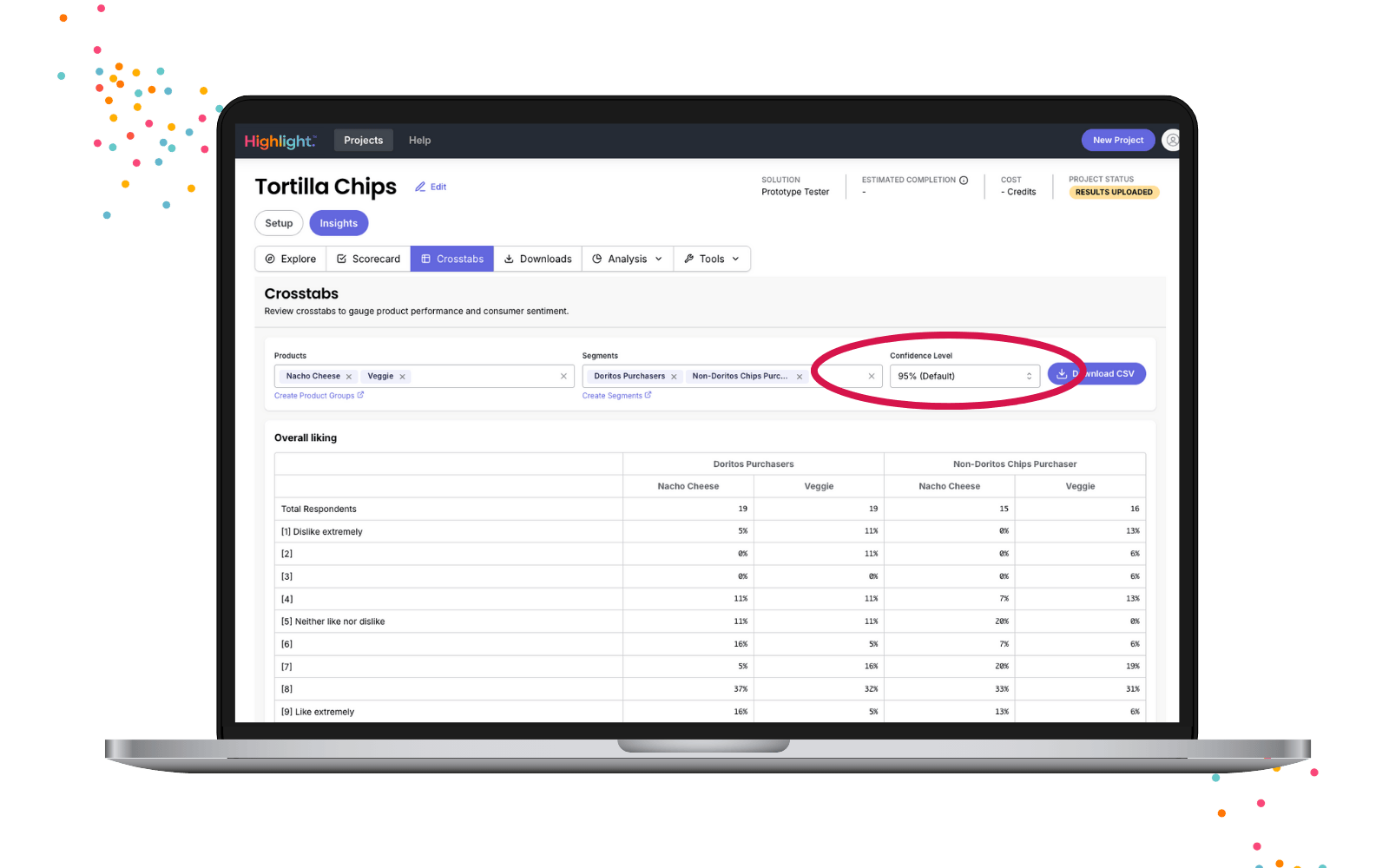
One of the more fun parts of, um, being at highlight and seeing different brands as their products, um, is actually looking at the data coming in and looking at our, at our insight suite. Um, and particularly we have, um, this feature in our software, um, that allows you to essentially pull out segments and carve up.
Hmm. Um, what do people think if they are Gen Z or they live in the south or they are sober or they are, uh, category engaged? Um, and particularly for, for the BERO example, um, we found that. Yes, BERO won across the board, um, across those 240 ish consumers. But when you actually pull out the sober folks, that delta of how much more they love BERO to the category leader is even greater.
Mm. And that, that preference is amplified. Um, and so there's all these really cool nuggets when you start to segment out your consumer data that, um, could easily be missed. Um, but. Perception vary, use cases, vary, competitors vary. It's um, I love the theme of course, as a, as a bias consumer of course. Yeah.
Consumer testing, um, aficionado. I'm constantly between like yeah. Mm-hmm. Just being a customer and being in the space. Yeah. You're like, totally. Yeah. Yeah. Yeah. It's fascinating. Um. Okay. Um, looking at the time, it looks like we're actually out of time. Unfortunately. I could talk to you guys forever. Um, Lucas, Jackie, thank you so, so much for joining us on the highlight reel.
Um, we will be sending a post-event email, um, with all of the ways to stay connected to Baral, uh, to BERO and to highlight, um, and be sure to follow us on LinkedIn, um, to hear about the next episode coming in 2026. Crazy that we are already talking about. Yeah, we're there. Insane. Oh my gosh. Thank you so much.
Thank you for grabbing us.